A woman named Sandra came to me eight months after her second child was born. “He’s still here,” she said. “He shows up, he helps with the kids, he’s not mean. But it feels like I’m married to a roommate who happens to be a great dad.”
She was not describing a marriage in trouble. She was describing a marriage in transition.
If you recognized that feeling, you are not alone. Most wives in this pattern never name it. They just feel it.
In my work with women in this exact pattern, the roommate feeling is almost never what it looks like. The husband has not stopped loving his wife. He has run out of the specific currency a husband needs to stay present. And he does not know that is what happened.
Her instinct, when she feels him going quiet, is to try harder. That is the loving response. It is also, in this specific pattern, the one that keeps the distance in place.
This guide explains what happened to him, what you can do about it this week, and why the fix is quieter than you think.
What actually changed when the kids came (and what did not)
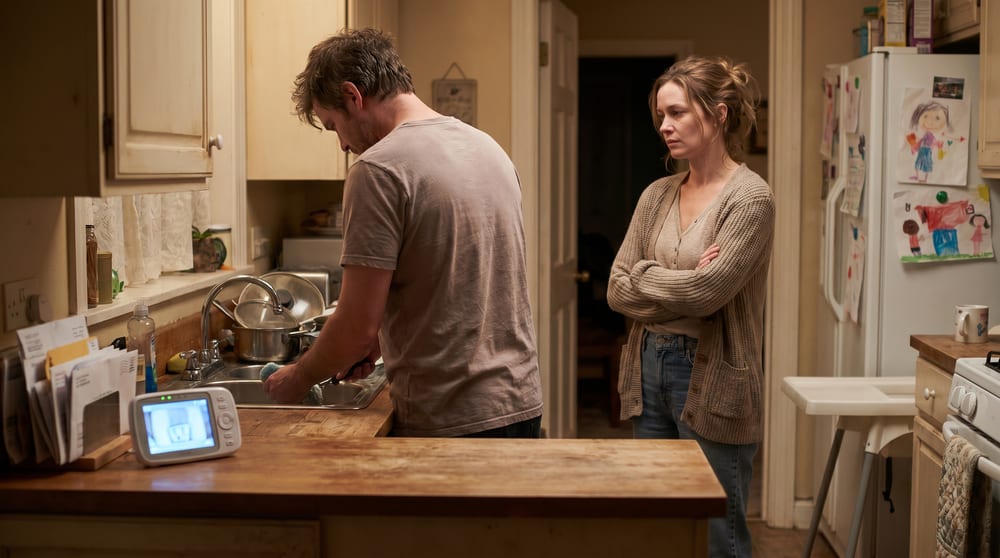
A child in the house does not change who your husband is. It changes what is available to him.
The thing that went missing is not love. It is availability.
Bonding does not happen all at once. It happens in a sequence. Each stage has a requirement. And each stage can be interrupted by something from outside.
A baby is an interruption. Not a bad one. A real one.
The secret is the sequence. When the sequence gets broken, romance does not die. It hides. And it waits.
Most wives misread the hiding as rejection. That reading is what makes the distance worse.
The three disruptions (and which one your husband is inside)
When a child enters a marriage, a married man recalibrates three things at once.
Identity. Bandwidth. Status inside the home.
All three shift. Usually one becomes the primary driver of the distance. Knowing which one is driving it will change everything you do next.
1. Identity disruption
Some men move from husband to husband-and-father without a pause. Other men go through a quiet crisis of who they are now.
The crisis is not dramatic. It is not a midlife rupture. It is quieter than that. It looks like a man who walks slower through the house. Who is more careful. Who has less to say.
What he is processing, without words, is something like this. He is driving to work and he thinks: am I good at this. Not good at his job. Good at being a father. Good at being the husband his wife needs him to be now that she has watched him try to figure out the first months of this. He does not say it out loud. He does not know how. So it comes out as a flatness in how he shows up, a quietness that his wife reads as distance when it is actually an answer he cannot find.
If your husband used to be playful and has become quiet, identity is likely the disruption.
2. Bandwidth disruption
A baby costs a kind of attention a man was not spending before. It is not only sleep. It is the background emotional load of being on alert for a small life.
A man with a full inbox has less in his tank for anything else. The thing that leaves first is the soft stuff.
Soft stuff, for a husband, is the flirtation. The small talk. The leisurely affection. The unrequested acts of help. The curiosity about the wife’s day.
When those go first, the marriage feels cold. That cold is not a character change. It is an energy problem. Men who feel overwhelmed often look emotionally distant. Angry, or indifferent, or somewhere far away. Most of the time it is none of those things. It is depletion.
He is not choosing you last. He is choosing you last because there is almost nothing left to choose with.
If your husband used to notice you and now does not, energy is likely the disruption.
3. Status-in-the-home disruption
This one is less talked about. It matters most in long marriages.
A married man’s sense of his position inside the home is load-bearing in how he shows up. Before the kids, he knew his place. He was your husband. After the kids, he shares the center of the home with a small loud person who needs his wife more than he does.
That is not a complaint about the child. It is a tectonic shift in the map of the marriage.
Most husbands do not have language for this. So it comes out as a slow step back. He stops initiating. He stops asking. He quietly becomes a supporting character in a house he used to co-own.
If your husband is more present at work and less present at home, status-in-the-home is likely the disruption.
What your husband is usually trying to tell you (but cannot)
A husband in this phase has his own words for it, and the grammar is worth noticing.
He says he does not feel loved. He does not say he does not love her.
He says he thinks she is not attracted to him. He does not say he is not attracted to her.
The roommate word comes from him too. It is the shared vocabulary for what happens when the sequence gets broken and neither person has a way to name it.
Why the well-meaning moves make it worse
Most wives, when they feel distance, try to close it. Every instinct says to ask what is wrong, offer more, and try harder. The instinct is loving. All three backfire on a husband who is already carrying too much.
Asking what is wrong tells him he is doing something wrong and does not have anything left to fix it with. That shame layer adds to the load.
Offering more feels, to him, like one more demand on a day that is already full.
Trying harder usually means more intensity. More intensity is the opposite of what a husband who is already full can take in. All at once is too much. One small thing, consistently, is the move.
Three things that work
You will not talk your way out of this. A conversation is the last move, not the first one.
The first thing that matters is knowing which of the three disruptions you are inside. Identity, energy, or status in the home. Naming the right one changes the tone of everything you do next. The move you make for a man working through an identity shift is different from the move you make for a man who is simply depleted. Pick the one that fits before you decide anything else.
The second thing is the thirty-second door. When he walks into the room, stop what you are doing for thirty seconds and look at him. No question. No update. No task. Just reception. Thirty seconds is enough. Most husbands do not experience this kind of unhurried attention in their own homes. When they do, consistently, something in them softens.
The third thing is one small ritual from before. Not a date night. A date night is too much, too fast. Something small. The first coffee together in the morning. The walk after dinner. The joke the two of you used to make in the kitchen. Pick one and put it back quietly, without making it a thing.
A wife who does all three for seven days almost always reports one small reach by the end of the week. A longer answer. A passing touch. A sentence he did not have to say.
When it comes, receive it without making it the room. A warm nod is enough. Then keep going for another week.
When post-kids distance is a warning sign, and when it is not
Most of the time, this is not a warning sign. It is a phase that lifts when the wife stops adding load.
A warning sign looks different. A warning sign is a husband building a life that does not include you. Friends you have not met. Schedules that do not mention you. Decisions made without you.
Distance has a waiting quality to it. A husband who is distant is, in most cases, waiting. A husband who is building a parallel life without you is not distant. He is gone, and he has not announced it yet.
Three months is a reasonable window to run the quieter moves before you treat the distance as the bigger thing. If, after three months of patient consistency, he is more absent rather than more present, that is the signal for a different conversation.
Almost never is that the first move.
Sandra came back five weeks later. She had named the disruption as energy. He was depleted, not drifting. She had run the thirty-second door every evening and put back one small ritual: Saturday morning coffee, before the kids woke up.
“He poured mine without me asking,” she said. “And then he just sat. He did not check his phone.”
She looked at me. “He used to do that. Before.”
I asked what had changed.
“I think I stopped making home feel like something he had to get through,” she said.
That is usually how it moves. Not with a conversation. Not with a plan. With one Saturday morning, and a cup of coffee, and thirty seconds of nothing required.
He is not gone. He is carrying more than he can show right now. And that kind lifts.
If you want to go deeper on the three disruptions and the moves that reverse them, I wrote What Husbands Can’t Resist about it. The book is the daily-practice version of coming back to each other when children have changed the shape of the marriage.
If the distance started before the kids, or if it is deeper than what is described here. emotionally distant husband: what’s actually happening and what to do about it names the four faces of distance and what each one needs.
Always on your side, Bob Grant
Bob Grant is a Professional Life Coach (PLC) with over twenty years of experience working with women on marriage, attraction, and reconciliation. He is the author of five relationship programs including The Woman Men Adore and The Bonding Stages. More about Bob is on the about page. The full editorial process for this blog is in the editorial policy. Please read the disclaimer before applying anything in this article to your own life.
Last updated: 2026-04-29.
Frequently asked questions
Why has my husband become so distant since the baby was born?
A child in the house is a bonding-stage disruption, not a character reveal. Your husband is most likely processing a shift in his identity, his energy, or his status inside the home, and the distance is almost always a symptom of one of those three, not a failure of love.
Is it normal for couples to feel like roommates after having kids?
Yes, and more common than almost any other marriage pattern. The roommate feeling is what happens when the small rituals that made the two of you a couple quietly got cut, one by one, because the energy was needed elsewhere, the love is not gone, the sequence got interrupted, and most marriages recover when the wife stops reading the distance as rejection.
How long does the distant phase last after children arrive?
Energy-driven distance lifts as the outside load lightens, usually within months of the child’s first sleep-through. Identity and status-driven distance can last longer, the status version lifts when the husband feels re-seen as a husband, not only as a father.
My husband checked out after the kids came. Is the marriage over?
Almost never. A checked-out husband is usually a waiting husband. The marriages that recover are the ones where the wife stops trying to close the distance with conversation and starts closing it with small, consistent presence.
How do I reconnect with my husband after parenthood changed everything?
Not through a big conversation. That is the last move, not the first one. Name which disruption is driving the distance, give him a thirty-second door every day for a week, and restore one small ritual that existed before the kids came.
Why does my husband seem more distant than I am, when I am the one doing more?
Women and men carry the post-kids load differently. Women carry it in the body and schedule, men carry it in the identity and sense of position. Your visible load looks heavier because it is more visible; his is quieter and, for many men, harder to name.
Should I push him to talk about how he is feeling?
No. Pushing a husband who is already full to talk adds to the load. Men manage their emotions by holding them in, and talking comes later, after home stops feeling like one more thing he has to get through.
What is the first thing I should stop doing this week?
Stop asking what is wrong. That single question, asked once a day for weeks, is the biggest silent driver of post-kids distance I see in coaching. He hears it as “I am failing you and I cannot fix it,” and most husbands respond by going quieter.